


Welcome back to The Customer Continuum. Issue #44.
If you’re new, here’s what you’ve walked into. I write this newsletter for customer marketing, CX, and customer success teams, and for anyone working on customer-led growth, the idea that a business grows through what customers experience after they buy. Most weeks I build something or tell a story from the work, and report what actually happened. This week is about how I build teams.
A function that didn’t exist yet
When a former boss called and said she wanted me to build a customer marketing function from scratch, my wife was seven and a half months pregnant. The function didn’t exist yet. There was no strategy, no shared idea of what the team should be known for, and a team spread across several countries.
So I had a clock running in two directions at once. I needed a strategy fast, and I needed the infrastructure to run it, before our daughter arrived and my attention went where it should.
It was also my first VP role, and that changed the job in a way I hadn’t fully expected. There was nobody above me in the function to absorb the hard calls. I had to build the function, build trust, and build relationships across the company, all at the same time, and the only way I knew to do that quickly was through partnerships with other teams and goals we owned together.
The question I asked the team
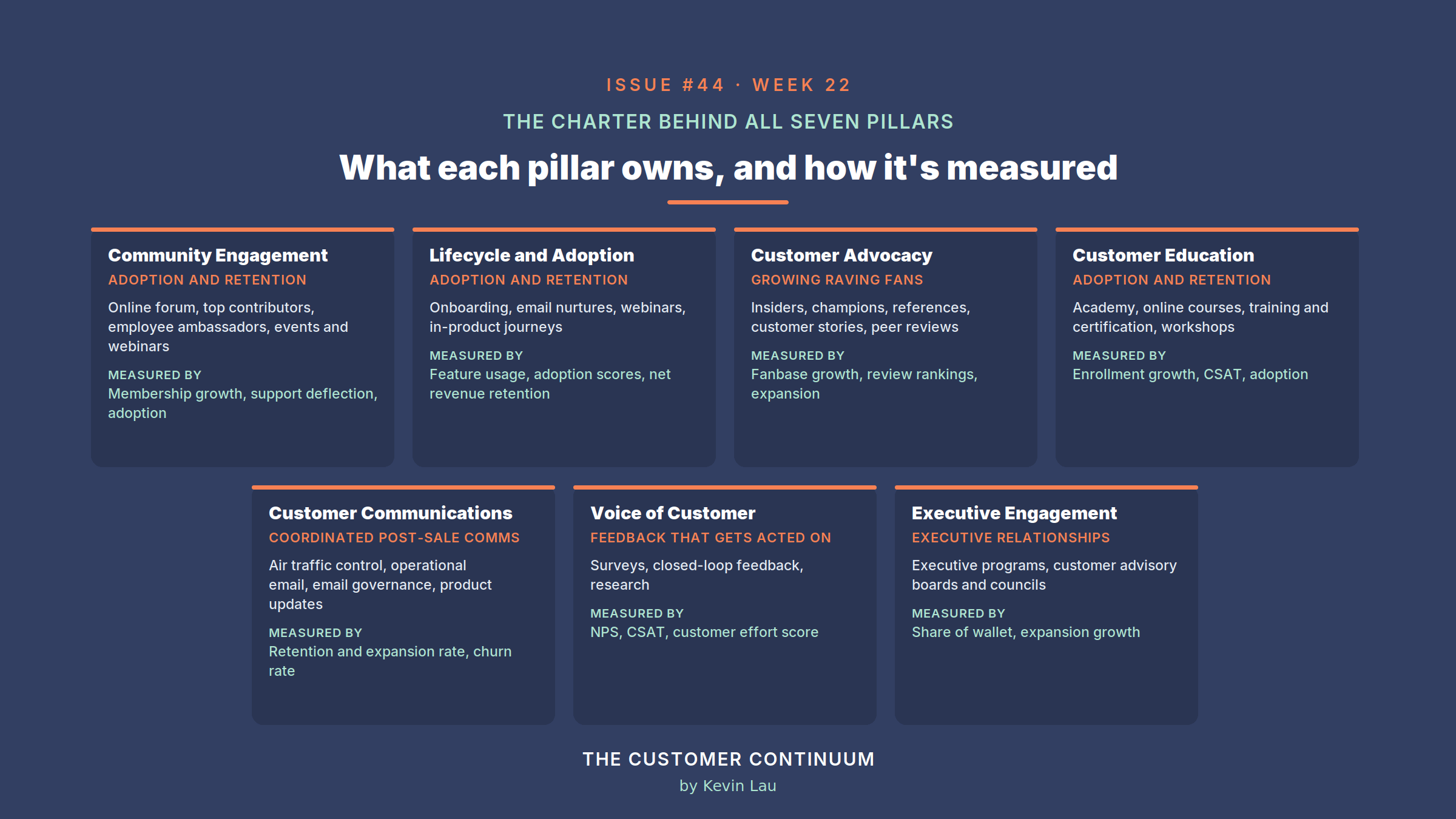
When I joined, I inherited a team of 10 to 12 people, and they were good at the work in front of them. They produced customer stories, managed reviews, and wrote case studies. What they hadn’t been given was a bigger picture of what customer marketing could be, or what the seven pillars of customer-led growth even were.
By the time I flew to India to meet some of the team in person, I knew what the problem was. Everyone was working hard and everyone was shipping something, a customer story here, a review campaign there, a case study for whoever asked first. None of it added up to anything bigger, because nobody had ever asked the team to build something together. It was tactical.
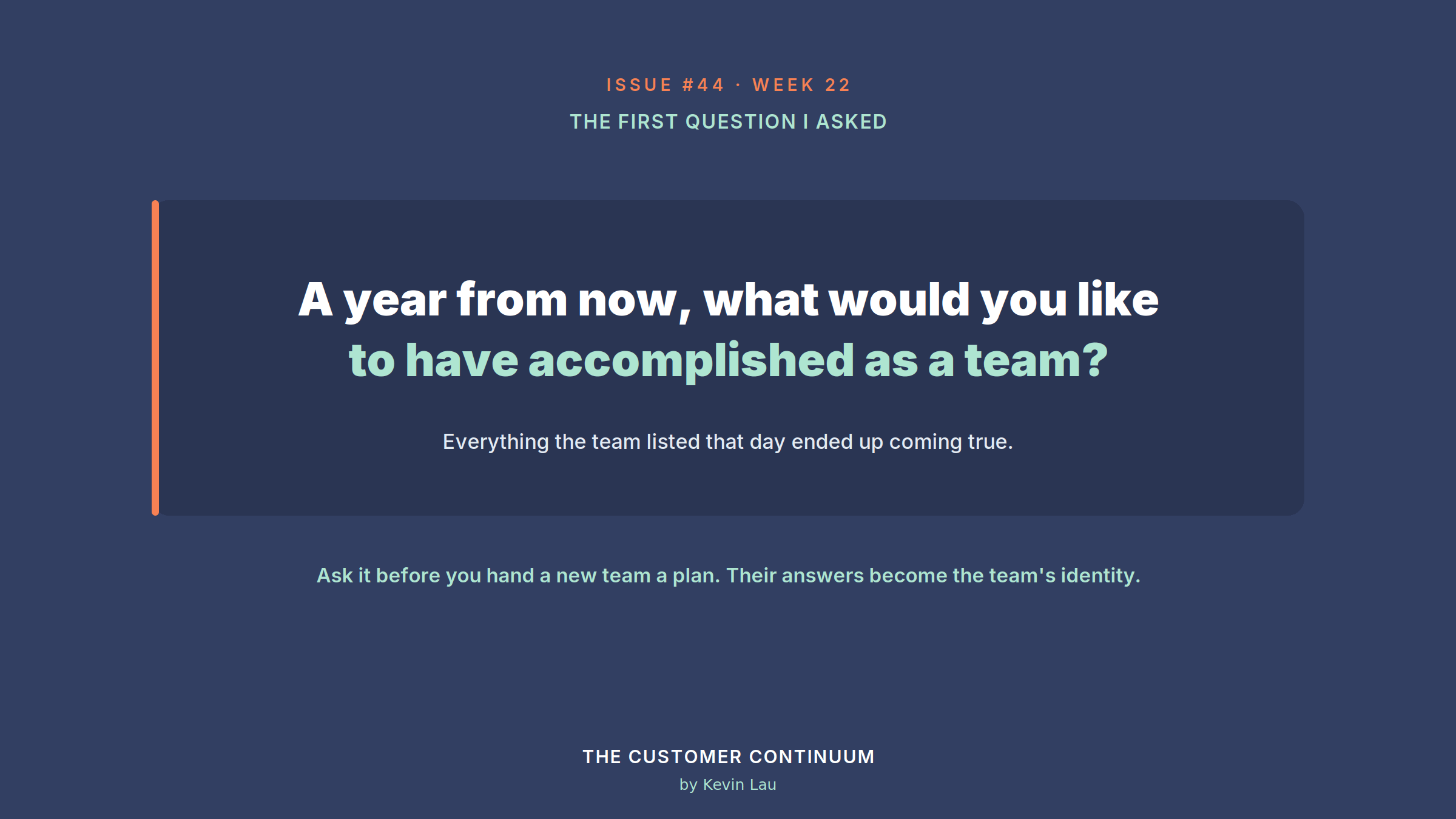
So that’s what I asked them. A year from now, what would you like to have accomplished as a team?
The “as a team” part was deliberate. I wanted them to stop thinking about their own next deliverable and start thinking about a bigger problem we could solve together, something that would inspire them and that they’d be proud to point to long after we’d all moved on. Their answers became the starting point for the team’s identity, and everything they listed that day ended up coming true.
How it grew, one experiment at a time
The team grew through a lot of different experiments over the years. Each one helped earn trust, both with the team and with the rest of the company.
Advocacy was the most visible practice we started, but the way the team was engaging customers was tactical, opportunistic, and fragmented. We had to get our house in order before anything else, so I built an advocacy portfolio and a community, and brought in key partners to help build the infrastructure and frameworks, and to mentor my team as I brought on new leaders.
Through that process, we started working with our cross-functional partners to build SLAs, rigor, and a shared mindset about how we should think about customers across their whole journey with us. That shared understanding helped us operate as one team instead of seven different functions competing for customers’ attention.
Naturally, lifecycle and retention came next. I’ve always believed adoption is the on-ramp to advocacy. When customers get real value in their first 30, 60, and 90 days, they’re far more likely to buy from you again, and to speak up for you. So we built that foundation.
From there, the momentum built on itself. Every year, as each program proved its value, we earned more resources to keep growing, more people and more budget. Over that stretch the budget grew roughly tenfold. Education started small, became an academy, and then a university. Voice of customer was one of the last pillars we built, and its early results made the case for a team of analysts.
Each one followed the same pattern: test something small, build the proof, earn the trust, and use that trust to ask for the next piece. Not everyone I inherited stayed, so in practice it was a rebuild, and the whole journey took about two and a half years.
By the end, all seven pillars were running, with a 30-person global team behind them. The voice of customer work was identifying $54M in at-risk revenue and routing it to customer success, and the community had grown to 50,000 members. Each of those pieces earned its way in, and none of them was in the plan on day one.
If I were building it today
The order would depend on the business. Advocacy came first there because that’s where we were weakest, and the way we engaged customers had to be fixed before anything else could work. Somewhere else, the weakest pillar might be adoption, or voice of customer, or how customers hear from you. So I’d start by finding where you’re weakest, or where there’s an easy win, and build from there. Then I’d hand an agent the weekly check on that pillar, like which new customers are getting value in their first 90 days if adoption is the gap, so the team spends its time with the customers who need a real human interaction. I’d still build the team, and I’d point more of its time at customers and less at assembling the picture of what’s happening with them.
What this means for you
If you’ve just inherited a team, ask them, together, where they want to be as a team a year from now before you hand them a plan. It costs you one meeting, and it gives you a team that’s building toward something they chose.
And if you’re trying to grow a function, start with the pillar where you’re weakest, or the one with the easiest win, and run the experiment before you ask for the headcount. Pick the smallest version of the thing you want to build, prove it works, and bring that result to the people who fund it. In my experience, the second ask goes far more smoothly once the first one has a result behind it.
This week’s free starter: the one-year team question
A short guide for the first real conversation with a team you’ve just inherited or just formed. It turns the question I asked in India into a 60-minute session: what to ask, how to capture the answers, and how to turn them into a team identity and three goals you can track.
→ Get the one-year team question
If you want the next step after that conversation, the 90-day experiment plan from a few weeks ago turns those goals into experiments.
One more thing: the seven-pillar assessment I promised for the end of the month is taking a little longer than planned. It’s coming soon, and you’ll hear about it here first.
FOR PAID SUBSCRIBERS
Turn your first experiment into your next ask
Every person and every dollar I added to that team started with a result someone could see. This week’s job is to turn one of your own results into an ask your leadership will say yes to.
1. Pick the pillar and the proof. Choose the pillar where you’re weakest, or the one with the easiest win, and one result from the last 90 days, even a small one.
2. Run it through the Decoder Ring. Paste this in:
Here’s one result from my team’s work in the last 90 days, and what I want to ask for next, whether that’s a hire, budget, or a new program. Write a one-page case for my CFO and a shorter version for my CRO. Lead with the outcome each one is measured on, show how this result moves it, and size the ask against what it would return. If the result isn’t strong enough to support the ask, say so and suggest a smaller ask that it does support.
That last line keeps you from walking into the room with an ask your proof can’t support.
3. Plan the next experiment with your pillar agent. Open the agents for that pillar in your Blueprint and ask for the smallest test that would prove the next piece.
→ Your full 135-agent Blueprint
— Kevin
P.S. If you know someone stepping into their first leadership role, forward them this one.