


Welcome back to The Customer Continuum. Issue #41.
If you’re new, here’s where we are. I write this newsletter for customer marketers, CX, and post-sale teams who want their work taken seriously by the people who fund it. Most issues are Build With Me, where I build something real and report what actually happened, including the parts that broke. Right now I’m four parts into a five-part series on Jarvis, an AI chief of staff I built this summer that reads my personal email, calendar, and meeting notes and briefs me out loud every weekday morning. The first three parts covered where it came from, what’s inside it, and what six weeks of using it actually changed. This week I’m looking at what building it taught me about the job itself.
Starting over, on purpose
This week I started a new role. Anytime I start something new, I go back to the same question I asked when I started building Jarvis: what do I already know how to do, and what am I going to have to learn the hard way?
Building an AI system as someone who’d barely used Terminal answered that question more clearly than any job change I’ve had. Some of what I’d learned over fifteen years in post-sale carried straight over. Some of it I had to pick up from scratch. And the thing that tied it all together turned out to be the same idea I’d want any customer experience leader to take into a new job.
What carried over: speaking in outcomes
The skill that mattered most was business acumen, being able to speak the same language as the people who run the company.
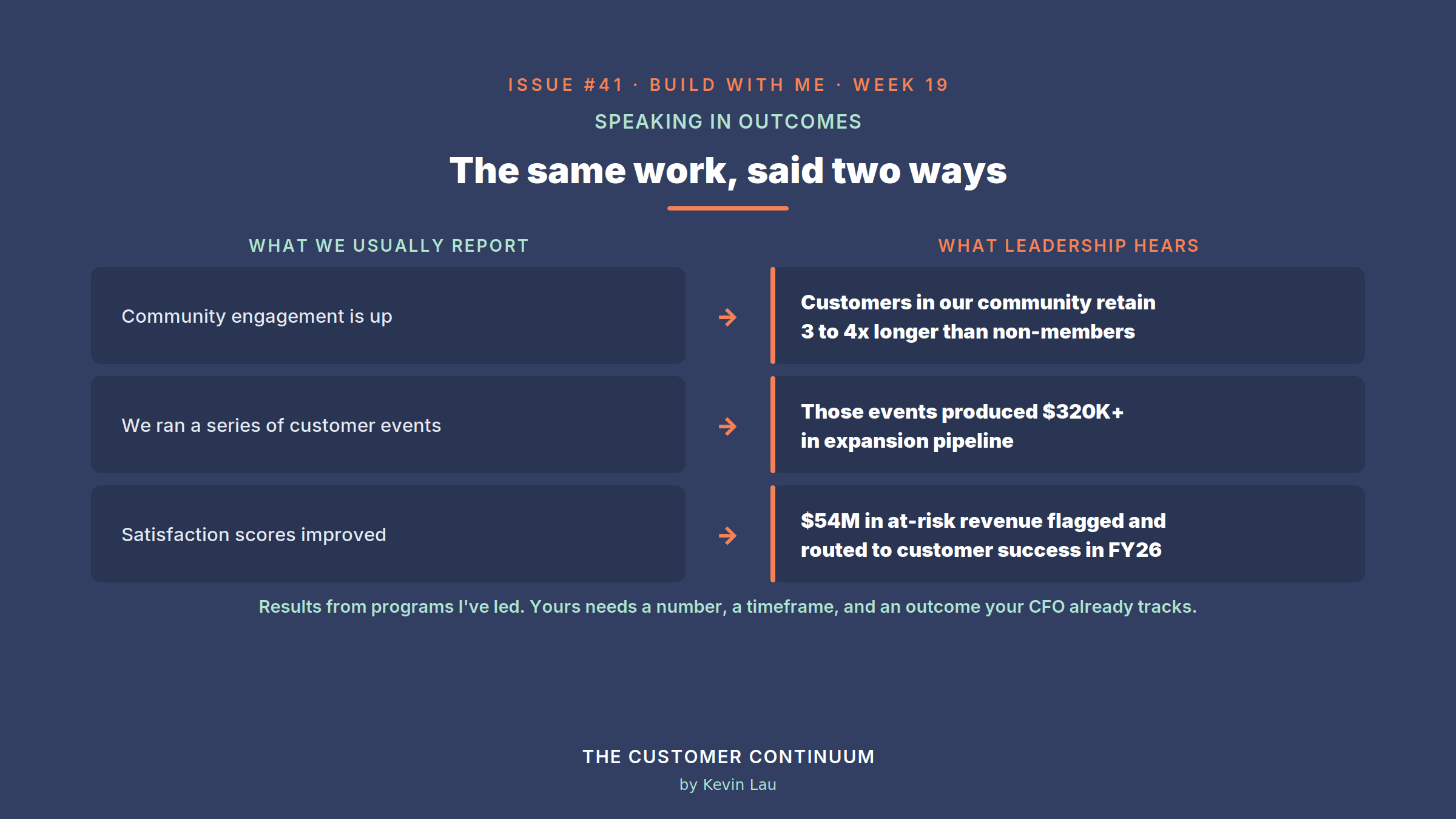
Customer marketers and post-sale teams tend to think about our work in terms of engagement, relationships, and trust. Those things are real, and they’re the reason the work matters. But when it’s time to defend what we do, a lot of us can’t put it in terms that get a leadership team’s attention, measurable and tangible and tied to something the business is trying to hit. That gap is the one I’ve spent the most time on in this newsletter, including the Decoder Ring issue, which was about translating your work into the number each executive actually protects.
Every executive talks in outcomes. Sit through any leadership presentation and nearly every slide connects what the business is doing to a result someone can measure.
When I built Jarvis, I designed the morning brief the same way. It leads with what needs a decision from me today, what’s overdue, and what I’ve let slip, and everything else comes after. That’s how I’d want a page handed to an executive to read, so that’s how I built it.
What I had to learn: getting outside my comfort zone
The harder lesson took me a whole career, and building Jarvis was only the latest version of it.
Almost every moment that changed how people saw me at work was one I didn’t feel ready for. Speaking in front of a room full of people, leading a team through a transformation when nobody was sure how it would land, taking over a team or a whole department someone else had built, and having to lay people off, sitting across from someone whose life was about to change because of a decision I had to carry out.
No one prepares you for those moments. They’re also the ones that move you from being a department lead to being someone people actually trust and believe in.
Building something technical as a non-engineer was a smaller version of the same discomfort. For the first few weeks I was constantly in over my head, and the only way through was to keep going and get a little less bad at it each day.
Trust gets earned one step at a time
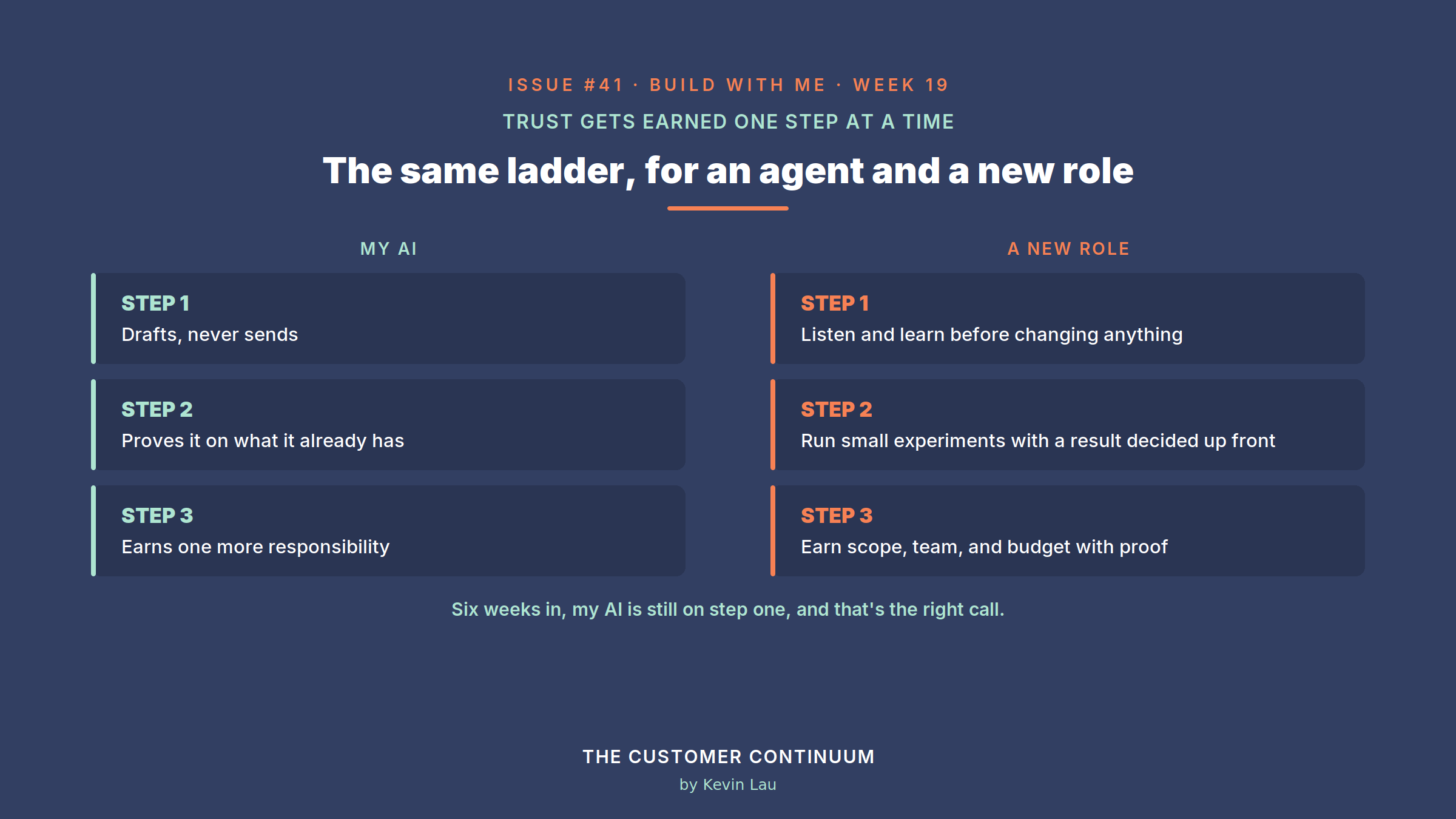
From the first day, Jarvis has been allowed to draft and never allowed to send. It writes the reply, saves it, and waits for me to read it. Every time I’ve thought about giving it more freedom, like letting it file things on its own or handle one kind of email without me, the rule has been the same: it gets more responsibility only after it’s proven it can handle what it already has. Six weeks in, it’s still drafting only, and that’s the right call, because in Part 3 you saw what it does when nobody’s watching.
That’s exactly how I think about starting a new role. You don’t walk in on day one expecting the full remit. You build a 90-day plan that doesn’t assume you’ll get everything right off the bat, you run small experiments, and you use what you learn to earn the next piece of responsibility. More scope, a bigger team, more budget, all of it comes after people have seen you deliver on what you’ve already been given.
Start with the mindset that you’re always testing and always learning, because that’s the path to getting what you want over the long run. It’s the hill I’ll die on.
What this means for you
Pick one thing your team reports on today, an engagement rate, a community metric, a satisfaction score, and write one sentence that connects it to an outcome your CFO or CRO already cares about, like retention, expansion, or pipeline. If you can’t write that sentence, that’s the gap to close first.
Then treat your next initiative like an experiment instead of a launch. Decide in advance what you’re testing, what result would tell you it worked, and what you’ll do if it doesn’t and time bound it. Bring that result to your leadership before you ask for more budget or more scope.
What’s next
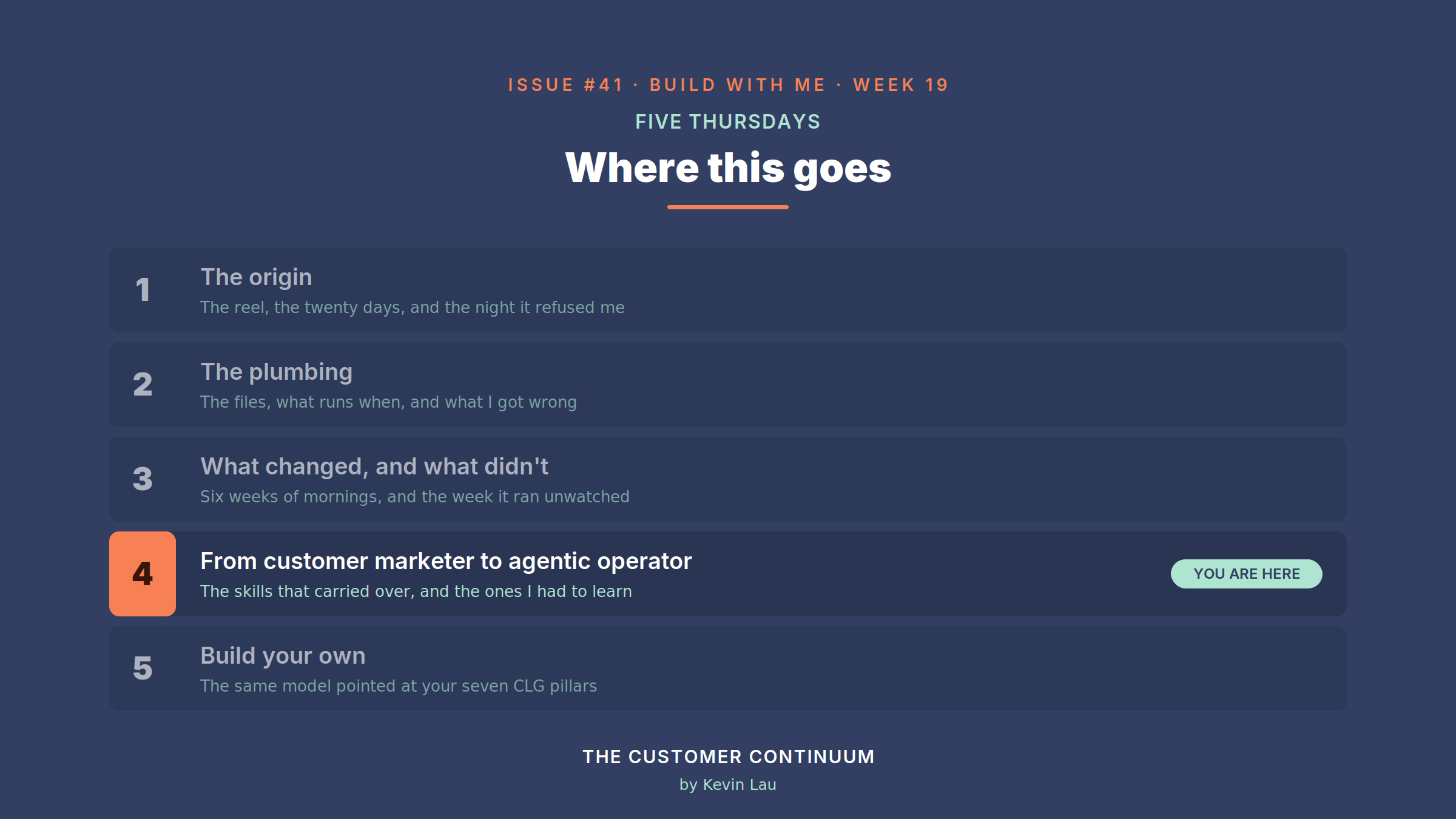
Next week is the finale. I’m pointing the whole model at the seven pillars of Customer-Led Growth, the model I use for growing a business through what happens after the sale, and introducing the seven-pillar assessment, a way to find out which pillar needs your attention first.
This week’s free starter: the 90-day experiment plan
A single prompt for starting anything new, a role, a program, or a project. Give it what you’re walking into and what you’re trying to achieve, and it builds you a 90-day plan made of small experiments, each with what you’re testing, how you’ll know it worked, and what you’ll ask for once it does.
→ Get the 90-day experiment plan
FOR PAID SUBSCRIBERS
Translate your work into outcomes this week
The free starter helps you plan what to prove. This week’s task brief helps you say it in the language your leadership already uses.
Run your team’s metrics through the Decoder Ring
Take the three numbers your team reports most often and paste them in with the brief below.
Here are the three metrics my team reports most often, with last quarter’s results. For each one, write a two-sentence version for our CFO, our CRO, and our head of customer success. Lead with the outcome that person is measured on, then explain how this metric moves it. If a metric can’t be honestly connected to an outcome they care about, say so and suggest what we should measure instead.
The last line tells you which of your reports to stop sending.
→ Your full 135-agent Blueprint
— Kevin
P.S. If you know someone starting a new role this month, forward them this one. The first 90 days go a lot better when you treat them as experiments.