


Welcome back to The Customer Continuum.
Issue #8.
What I thought was my biggest weakness became my superpower.
The Declaration
At the beginning of 2025, I made a declaration.
I was going to get my voice out there.
Not because I had it all figured out. But because I was tired of keeping lessons locked in my head. Tired of watching customer marketers struggle with the same challenges I’d already navigated. Tired of staying quiet when I had something to say.
So I did three things:
I started writing on LinkedIn nearly every day
I launched a quarterly mentorship program to help customer marketers be seen and taken seriously
In November, I started this newsletter
None of it was easy. All of it required grit, perseverance, and tenacity.
Here’s what I learned - both in building my personal brand and in leading customer marketing at Freshworks.
2025 By the Numbers
Personal Brand:
430+ Newsletter subscribers (started in November)
~$2k Revenue from paid subscribers in less than 2 months
14K+ LinkedIn followers
73K+ X followers
365 Days of writing (nearly every day)
At Freshworks:
3 Industry awards won
7 Pillars of Customer-Led Growth - made major progress establishing all 7, including launching Executive Engagement and building a robust VoC practice from the ground up
What Worked
Building the Personal Brand
1. Consistency compounds faster than quality
I didn’t wait until I had the perfect post. I just started. One post became ten. Ten became fifty. Fifty became a habit.
By the end of the year: 430+ newsletter subscribers, 14,300 LinkedIn followers, 73K+ on X.
The lesson: You don’t need to be great to start. You need to start to be great.
Action for you: Pick one channel. Show up consistently for 90 days. Don’t judge the results until then.
2. Speaking forced me out of my comfort zone
Here’s a confession: I hate public speaking.
But this year I became a more regular speaker at events. Podcasts. Webinars. Panels.
Every single time, the nerves showed up. Every single time, I did it anyway.
That’s how you grow. Not by staying comfortable. By doing the thing that scares you until it doesn’t.
The lesson: Growth lives on the other side of discomfort.
Action for you: Say yes to one thing that scares you in 2026. A talk. A podcast. A post you’ve been sitting on. Do it scared.
3. Mentorship scales your impact
This year I launched a quarterly mentorship program with one goal: help customer marketers be seen and taken seriously by leadership.
What I discovered is that most customer marketers aren’t struggling with tactics. They’re struggling with visibility. They’re doing great work that nobody outside their function sees.
The lesson: If you want to grow, teach what you know. It forces clarity and builds community.
Action for you: Find one person to mentor this year. Even informally. You’ll learn as much as they do.
At Freshworks
4. We reshaped the narrative of what customer marketing is
Customer marketing is the most misunderstood function in marketing.
Most companies still think it’s a case study factory. A team that collects logos and writes testimonials. The industry talks about customer marketing and advocacy interchangeably - as if they’re the same thing.
They’re not.
Advocacy is an output. Customer obsession is the operating system.
This year, we built something most haven’t seen in the industry: a true Customer-Led Growth practice spanning seven pillars - Voice of Customer, Customer Advocacy, Community, Customer Education, Lifecycle & Retention, Customer Communications, and Executive Engagement.
Not siloed programs. An integrated flywheel.
Each pillar feeds the others. VoC insights inform Education. Education drives Adoption. Adoption fuels Advocacy. Advocacy deepens Executive Engagement. And the cycle compounds.
The shift wasn’t about running more programs. It was about connecting them to drive customer obsession across the entire journey - from onboarding to renewal to expansion.
The result: We went from being seen as a support function to a strategic growth engine. A trusted partner to Sales, Product, CS, Support, and leadership.
The lesson: If you want to change how others see your function, stop talking about programs. Start talking about the customer journey and where you drive impact across it.
Action for you: Map your current programs to the customer journey. Where are the gaps? Where are things siloed? The unlock isn’t doing more - it’s connecting what you already have.
5. Hiring well is the highest-leverage thing you can do
This year we brought on exceptional talent and created space for existing team members to step up and own entire pillars of our CLG practice.
The lesson I keep relearning: The quality of your team determines the quality of your outcomes. Hire slow. Hire well. Then get out of their way.
Action for you: Spend more time on hiring than you think you need to. One great hire changes everything.
6. Customer obsession is a company imperative, not a function’s job
I stopped pitching customer marketing as something my team does. I started positioning customer obsession as something the entire company owns - see issue #7 if you missed it.
This is the shift most customer marketers miss. They fight for a seat at the table by proving their programs work. But programs don’t get you the seat. Solving company-wide problems does.
When I joined Freshworks, I led with Forrester data in my first presentation to leadership:
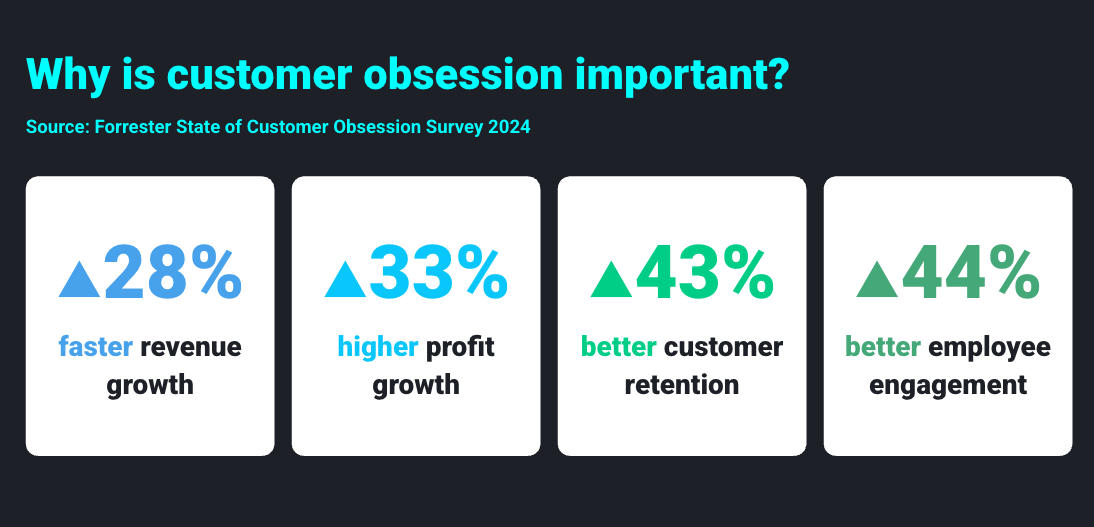
I told them: What’s at stake is the relationship we’re building with customers. Customer obsession isn’t one team’s job. It’s how teams lock arms to solve a bigger problem than themselves.
That reframe changed everything. Cross-functional partnerships opened up. Leadership started leaning in. We went from being order-takers to being strategic partners.
The lesson: If you want a seat at the table, stop asking for one. Start solving problems that matter to the people already sitting there.
Action for you: Identify one problem your leadership cares about that you can help solve. Build an experiment around it. Show results.
What Was Hard
1. Finding my voice took longer than expected
Early in the year, my posts sounded like everyone else’s. Safe. Generic. Forgettable.
It took months of writing to figure out my POV. To get comfortable being direct. To stop hedging every opinion.
The lesson: Your voice isn’t something you find. It’s something you build through reps.
2. Balancing creation with execution
I have a day job. A team. Goals. Deadlines.
Adding daily writing on top of that meant something had to give. I had to get ruthless about how I spent my time. I had to say no to things I used to say yes to.
The lesson: You can do anything but not everything. Protect time for what matters most.
3. Learning to slow down before speeding up
We’re trained to move fast. Ship it. Launch it. Move to the next thing.
But this year I learned that speed without strategy is just motion. The best outcomes came when I paused to assess before acting. When I gave ideas room to breathe before executing.
It feels counterintuitive. In a culture that rewards velocity, slowing down feels like falling behind.
But the teams that win aren’t the ones that move fastest. They’re the ones that move with clarity.
The lesson: The pause before the push is where the real thinking happens.
Action for you: Before your next big initiative, block time to just think. No slides. No meetings. Just you and the problem. The clarity you gain will save you weeks of rework.
4. Leading a team through transition
Building a team is messy. There’s storming, norming, and forming. There are growing pains. There are moments when the vision is clear but the path isn’t.
This year I learned to be a steady anchor while creating space for others to step up. It’s a balance I’m still figuring out.
The lesson: Leadership isn’t about having all the answers. It’s about creating clarity when things feel uncertain.
5. The doubts never fully go away
Even now, with 430+ subscribers, 14K LinkedIn followers, and a year of daily writing behind me, the doubts still show up.
Who am I to write about this? Is anyone even paying attention? What if I run out of things to say?
The difference is I stopped letting the doubts decide.
The lesson: Confidence doesn’t come before action. It comes after.
What Surprised Me
1. People actually want to hear from you - and pay for your expertise
I spent years assuming no one cared what I had to say. Turns out, the opposite was true.
This week, a reader told me: “This newsletter is pure gold. I’m flagging it to read once a quarter so I can keep it top-of-mind.”
Even more surprising: in less than two months, paid subscribers generated nearly $2K in revenue. I didn’t start this newsletter to make money. I started it to share what I’ve learned. The fact that people are willing to pay for it still catches me off guard.
That validation made the entire year worth it.
2. What I thought was a weakness is actually a superpower
I’ve always thought of myself as calm. Too calm, maybe. In a world that rewards charisma and big energy, I assumed that made me boring. Uninteresting. Forgettable.
Then I started getting notes like this one from a fellow VP:
“I really appreciate the calm and positive vibe you bring into every conversation. In an org that can get pretty chaotic, that positivity truly stands out.”
I’ve heard versions of this all year. From peers. From cross-functional partners. From my own team.
Turns out, calm isn’t boring. Calm is steadying. In a world full of noise and chaos, being the person who brings clarity and groundedness is rare.
The lesson: The thing you dismiss about yourself might be the thing others value most.
Action for you: Ask someone you trust: “What do you think I’m good at that I probably don’t see?” The answer might surprise you.
3. Writing clarifies thinking
I didn’t start writing to become a better thinker. But that’s what happened.
Forcing myself to articulate ideas every day sharpened how I approach problems at work, how I communicate with my team, and how I make decisions.
Writing isn’t just content creation. It’s a thinking tool.
4. We’re building something the industry hasn’t seen
Most customer marketing teams I talk to are still running siloed programs. Advocacy over here. Community over there. Education somewhere else. No connective tissue.
What surprised me is how rare it is to see customer marketing built as an integrated system.
When I started sharing our approach - the seven pillars, the flywheel, the connection to customer obsession - the response was overwhelming. People wanted to know more. They wanted frameworks. They wanted to understand how to build this at their own companies.
That’s part of why I started this newsletter.
The lesson: If you’re building something different, share it. The industry is hungry for new models.
5. Trust is built faster than you think - when you show up consistently
At work, we went from being seen as a “nice to have” function to a trusted partner in less than a year and half.
Not because we did something flashy. Because we showed up consistently, delivered what we promised, and solved problems that mattered.
The lesson: Trust compounds like interest. Small deposits over time create massive returns.
What I’m Taking Into 2026
1. Double down on writing
It’s working. I’m not going to chase new channels or tactics. I’m going to go deeper on what’s already compounding.
2. Keep speaking (even though I hate it)
Growth lives outside the comfort zone. I’m going to keep saying yes to stages that scare me.
3. Be more vocal as a leader
One piece of feedback I got this year: “I’d love to see you be more vocal and impactful across the organization.”
I’ve spent years observing and keeping insights in the background. In 2026, I’m going to speak up more - even when it’s uncomfortable.
4. Relationships are the ROI
The notes I got this year reminded me: relationships matter more than results.
The people who reached out. The mentees who trusted me. The readers who subscribed. The cross-functional partners who became real collaborators.
They made this year meaningful.
In 2026, I want to be more intentional about connection. More generous with gratitude. More present in relationships.
5. Don’t take yourself too seriously
This one hits different as a dad watching my nearly 20-year-old grow up before my eyes.
Time moves fast. The moments pass whether you enjoy them or not.
So enjoy them.
Have fun. Laugh more. Celebrate the small wins. Stop treating everything like a high-stakes performance.
The work matters. But so does the joy along the way.
6. Keep teaching what I learn
The mentorship program, the newsletter, the daily posts - they all stem from the same belief: sharing what you know helps everyone rise.
I’m going to keep doing that.
My 2026 Mantra: Relationships are the ROI.
Not followers. Not impressions. Not pipeline influenced.
Relationships.
The trust you build. The people you help. The connections that outlast any job or title.
That’s what compounds. That’s what matters.
Your Turn
As you reflect on your year, here are the questions I’d sit with:
What declaration did you make at the beginning of the year? Did you follow through?
What worked that you should double down on?
What was hard that made you better?
What surprised you?
What are you taking into 2026?
Thank You
To everyone who subscribed, upgraded, commented, shared, or just read along quietly - thank you.
You made the doubts worth ignoring.
See you in 2026.
What’s Next
The newsletter returns in January with my 2026 predictions for customer marketing.
Until then - rest, celebrate your wins, and come back ready.